Every spring, homeowners looking into roof replacement in Hennepin County face a familiar, frustrating ritual. The snow melts, and suddenly, water stains appear on living room ceilings, or mold begins to bloom in upper-floor closets.
For many, the immediate reaction is confusion—even anger. “How is this happening? My roof is only a few years old, and it passed city inspection!”
It is a harsh reality of local homeownership: a roof built strictly to minimum municipal building codes is legally compliant, but it is often practically guaranteed to fail under severe Minnesota winter conditions. To protect a home from the catastrophic water damage caused by ice dams, a roof installation cannot just meet local standards. It must actively exceed them.
The Core Defect: The 24-Inch Ice Barrier Rule
To understand why a code-compliant roof can still leak, it helps to look at exactly what the law requires.
Under standard Minnesota residential building codes, roofing contractors are required to install a self-adhering polymer-modified bitumen sheet—commonly known as an ice and water shield—along the eaves. The code dictates that this waterproof barrier must extend from the lowest eave edge to a point at least 24 inches inside the exterior wall line of the house.
On paper, 24 inches sounds substantial. In a mild winter, it is. But a standard Plymouth freeze-thaw cycle is anything but mild.
[ Ice Dam Forms at Eave ]
       │
       ▼ (Water backs up under shingles)
[ 🛑 24" Code Minimum Protection Ends ]
       │
       ▼ (Water hits unprotected standard underlayment)
[ 💧 Leak Infiltrates Subfloor & Attic ]
When heavy snow accumulates on a roof, escaping indoor heat warms the roof deck from below, melting the bottom layer of snow. As this snowmelt runs down the roof and reaches the unheated eave edge, it refreezes, creating a literal dam of ice.
As the ice dam grows, subsequent runoff backs up behind it, pooling into standing water. Because asphalt shingles are designed to shed shedding water, not hold standing water, the liquid finds its way underneath the shingles. If the ice dam backs up 25 inches or more past the exterior wall line, it surpasses the legal barrier. It hits standard roofing felt or synthetic underlayment, seeps through the wooden roof decking, and flows directly into attic insulation and drywall.
Architectural Weak Points That Defy Standard Code
The 24-inch rule is a baseline designed for a simple, flat roof plane. Modern homes in Plymouth, however, feature complex architecture that creates perfect breeding grounds for deeper, more aggressive ice dams.
- Complex Valleys & Intersections: Where two roof slopes meet, snow accumulates deeply. Standard code does not mandate the same level of aggressive, wide-spread shielding in these high-risk channels as it does at the eaves.
- Vaulted Ceilings: Homes with beautiful, dramatic vaulted ceilings have very little space between the interior ceiling drywall and the exterior roof deck. This makes uniform attic insulation nearly impossible, leading to localized hot spots on the roof that accelerate ice dam creation.
- Low-Slope Transitions: When a steep roof transitions to a flatter slope (common over porches or additions), water slows down, freezes faster, and creates massive, deep pools that easily bypass a standard 24-inch barrier.
The Low-Bid Trap: Designing for Inspection Day, Not Winter
In the wake of local hail storms, the Twin Cities market is often flooded with out-of-state contractors or low-bid operations. To win a job on price alone, these companies rely entirely on meeting the bare minimum criteria required to pass a municipal inspection.
They use exactly two rows of ice and water shield. They reuse old, dented valley metal. They ignore the home’s overall ventilation ecosystem.
Technically, the city inspector will sign off on the work because it meets the letter of the law. The contractor collects the insurance check and moves on. The homeowner assumes they are protected—until a heavy winter exposes the vulnerability three or four years later, long after the low-bid contractor has changed names or left the state.
Engineering a Climate-Resilient Roof System for Roof Replacement in Hennepin County
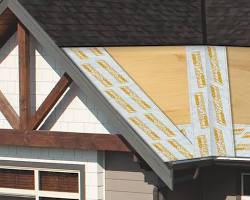
True authority in roofing isn’t about slapping shingles down fast enough to pass inspection; it’s about understanding the physics of a Minnesota winter. A roof engineered to survive decades in Hennepin County requires an integrated, upgraded system approach:
1. Extended Eave and Vulnerability Protection
Instead of stopping at the legal 24-inch mark, a climate-resilient installation often requires running the ice and water barrier three or even four rows up the roof deck, completely covering the thermal boundary of the home. Furthermore, high-performance membranes should completely line all valleys, roof-to-wall transitions, and areas around chimneys or skylights.
2. Active, Balanced Ventilation
An ice barrier is a secondary defense; the primary defense is preventing the roof deck from getting hot in the first place. A high-performance roof balances intake ventilation (bringing cool air in through the soffits) with exhaust ventilation (exhausting hot air through continuous ridge vents). This keeps the roof deck at a uniform, cold temperature, cutting ice dams off at the source.
3. Upgraded Sub-Layers
Replacing cheap tar paper with heavy-duty, tear-resistant synthetic underlayments across the remainder of the deck ensures that even if anomalous weather pushes water past the secondary defenses, the structural wood underneath remains dry.
The Mark of Local Craftsmanship
Building beyond the baseline code requires a commitment that standard roofers rarely make. When a local contractor installs a complete, structurally upgraded system using premium materials, it changes how manufacturers view the property.
Top-tier manufacturers like GAF or Owens Corning only extend their elite, lifetime workmanship warranties (which cover the actual labor of a replacement for decades, backed by the manufacturer itself) to contractors who install upgraded, cohesive systems that exceed local codes.
When planning a roof replacement, the question shouldn’t be, “Will this roof replacement in Hennepin County pass inspection?” The question must be, “Is this engineered for a Minnesota winter?” To ensure your home is protected by a roof built to a climate-resilient standard rather than a legal minimum, reach out to the certified local experts at Advanced Exteriors MN for a comprehensive structural assessment.
Q: How often do houses require a roof replacement in Hennepin County?
A: On average, a standard asphalt shingle roof lasts between 20 to 25 years. However, because of severe Minnesota weather—including heavy hail storms and intense freeze-thaw cycles—many homeowners end up needing a full roof replacement in Hennepin County sooner due to storm damage or persistent ice dam infiltration.
Q: Does standard homeowners insurance cover a roof replacement from ice dam damage?
A: Generally, if an ice dam causes sudden, accidental water infiltration that damages your interior ceilings or walls, your insurance policy will cover the cost of the interior repairs. However, insurance rarely pays for the actual ice dam removal or a complete roof replacement in Hennepin County unless the underlying roof structure was explicitly compromised by a recent, documented storm event like wind or hail.
Q: What is the best preventative measure against ice dams during a roof replacement?
A: The most effective time to stop ice dams is during a full roof teardown. You should ensure your contractor installs a self-adhering ice and water barrier that extends well past the legal code minimums (at least 3 to 4 rows up from the eaves) and verifies that your attic insulation and ridge ventilation systems are perfectly balanced to keep the roof deck cold.