Living in Plymouth, MN, means our homes endure some of the most extreme weather in the country. From the heavy snow loads of January to the sudden, violent hail storms of a Minnesota July, your roof is the first line of defense against the elements. A subtle drip in the attic or a mysterious water stain on the ceiling aren’t just minor annoyances—they are signs that the harsh Twin Cities climate has found a way in.
Ignoring these signs can lead to structural rot, hazardous mold, and ruined insulation. Prompt and effective roofing leaks repair Plymouth MN is essential for protecting your property value and your family’s health. This guide provides a localized roadmap to help you identify, fix, and prevent leaks in our specific Midwestern environment.
Why Roofing Leaks Repair in Plymouth, MN is Urgent
In Minnesota, a small leak is rarely “just” a leak. Our extreme freeze-thaw cycles mean that water entering a small crack during a warm afternoon can freeze and expand overnight, widening the gap. By the time you see a stain on your ceiling, water has likely already saturated your insulation and framing.
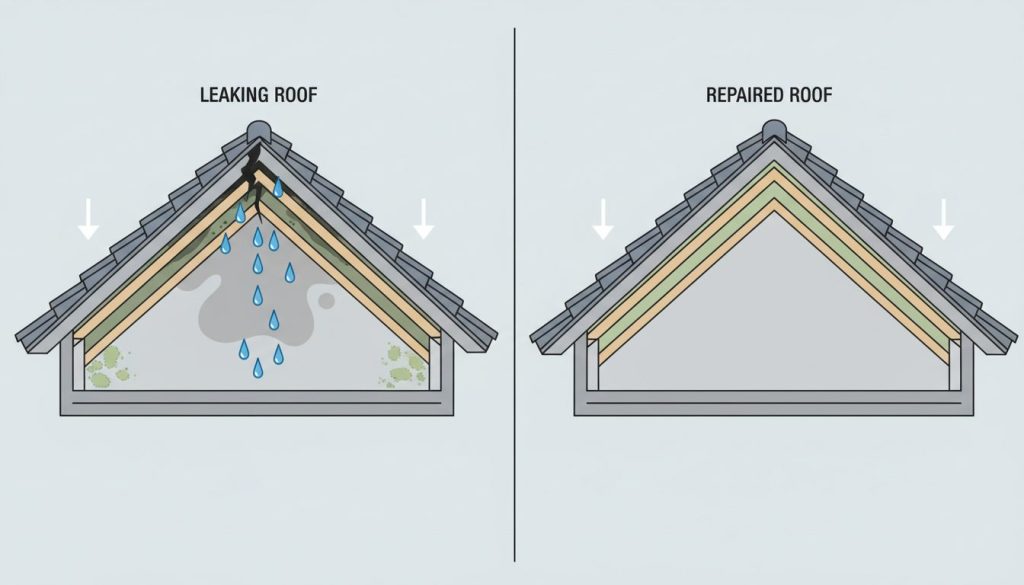
What is the MN Freeze-Thaw Cycle?
The freeze-thaw cycle starts when snow or ice melts as temperatures increase. When the weather cools again, the melted water freezes back into ice. This process begins on a roof, where snow melts during the daytime. The water gets into tiny cracks in shingles, under flashing, or along the edges of the roof.
According to the International Association for the Properties of Water and Steam (n.d.), each freeze increases trapped water volume by up to 9%, slowly widening small gaps in shingles, flashing, and roof membranes. When it warms again, the ice melts, allowing water to move deeper into those openings.
This cycle repeats over and over, gradually creating freeze-thaw damage that gets worse with each temperature swing. Here’s the end-result of this freeze-thaw cycle to your roof:
- Structural Integrity: Constant water intrusion can rot wooden rafters and joists. In Plymouth’s older neighborhoods, such as those near Medicine Lake, older wood may be more susceptible to softening if left damp.
- Mold & Health: High humidity in Minnesota summers combined with a leak creates the perfect breeding ground for mold. Within 24 to 48 hours, mold can begin to grow, impacting the indoor air quality of your home. You need to take action immediately. Mold can be hazardous for people, pets, and properties, so you’ll want to remove it as soon as possible.
- Energy Efficiency: Saturated insulation loses its R-value. In a Plymouth winter, this means your furnace has to work much harder, leading to spiked heating bills.
Pinpointing the Source: Detective Work for MN Homeowners
Finding a leak in a Plymouth home can be tricky because water often travels along rafters before dripping.
Inside-Out Inspection
Start in your attic on a rainy day. Look for moisture or dark “water trails” on the underside of the roof decking. Pay close attention to chimneys and plumbing vents, as the expansion and contraction caused by -20°F winters often pull flashing away from these areas.
The Exterior Check
Use binoculars to scan your roof from the ground. Look for:
- Hail Damage: Look for “bruises” or missing granules on shingles—a common issue after summer storms in Hennepin County.
- Curled Shingles: Extreme UV exposure in the summer can cause shingles to become brittle and curl.
- Ice Dam Evidence: If you see staining specifically near the edges of your roof, it’s likely a result of past ice damming.
Safety Tip: Never walk on a wet or snow-covered roof. If you can’t see the source from the ground or the attic, it’s time to call for professional roofing leaks repair contractor in Plymouth MN.
Common Culprits for Plymouth Roof Leaks
| Culprit | Why it happens in Plymouth |
| Ice Dams | Snow melts on the upper roof, runs down, and refreezes at the cold eaves, forcing water under the shingles. |
| Hail Damage | Frequent summer storms can crack shingles or knock off protective granules. |
| Compromised Flashing | The extreme MN temperature swings (from -30°F to 100°F) cause metal flashing to expand and contract until seals break. |
| Clogged Gutters | Falling leaves from Plymouth’s heavy tree canopy (especially in areas like Parkers Lake) block drainage. |
Step-by-Step DIY Tips for Minor Repairs
If you are a confident DIYer, you can handle small issues like a single missing shingle or a small crack in a vent boot.
- Temporary Patching: During a storm, use roofing cement to seal small cracks. For larger damage, a heavy-duty tarp secured with 2x4s can prevent further interior damage until the weather clears.
- Shingle Replacement: Slide a pry bar under the shingle above the damaged one to break the seal. Remove the nails, swap in a new shingle, and secure it with four galvanized roofing nails.
- Sealant Application: Use a high-quality polyurethane sealant around vent pipes or flashing. Ensure the area is clean and dry before applying.
Note: The City of Plymouth requires building permits for most re-roofing projects. While minor “patch” repairs may not always require one, always check with the Plymouth Building Department for current regulations.
You might qualify for a Plymouth Home Rehabilitation Program. The Plymouth Housing and Redevelopment Authority (HRA) offers a zero-interest deferred loan up to $40,000 for low and moderate income households to maintain, repair, and improve their homes in the City of Plymouth.
Program guidelines and income requirements are subject to change.
Eligible home improvements cover repairs required to make your home a safer, more energy efficient place to live. This includes new roofs, siding, windows, electrical, plumbing, heating, and insulation.
When to Call the Professionals
Because of the complexity of Minnesota roofing (specifically regarding ice-and-water barriers and attic ventilation), many repairs are best left to local experts. You should call a professional if:
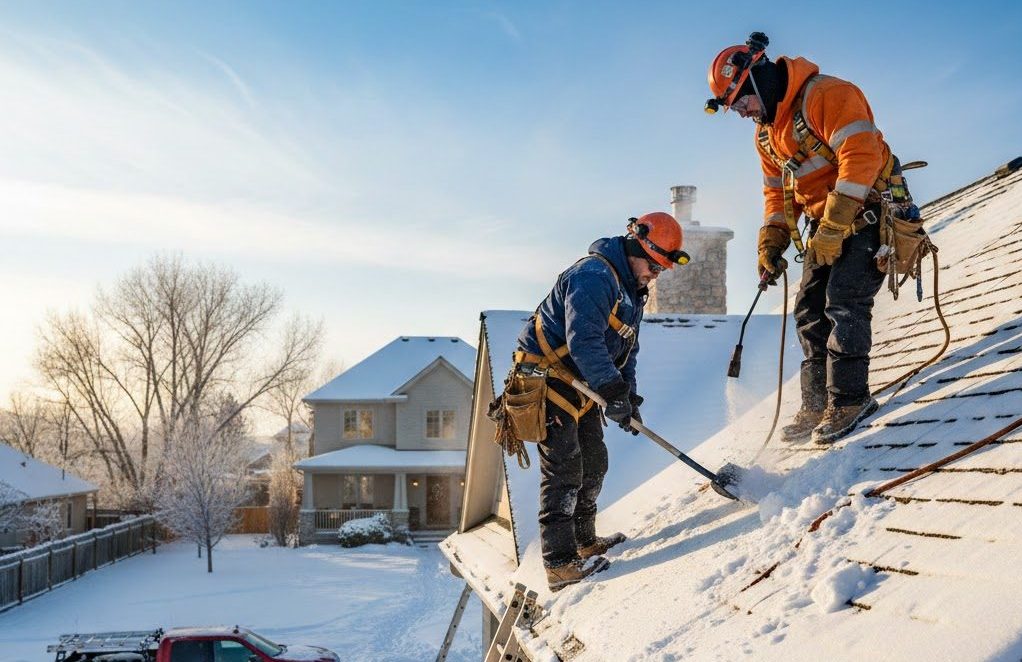
- The roof is steep: Anything above an 8/12 roof pitch should be left up to the professionals. Even experienced roofers often avoid anything over a 9/12 and will usually use an anchor and harness for any roof that is 9/12 and up.
- Mystery Leaks: If you can’t find the source, pros use infrared cameras to detect moisture behind walls.
- Multiple Leaks: This usually indicates your roof has reached the end of its lifespan (usually 15–25 years for asphalt shingles in MN).
- Insurance Claims: If you suspect hail or wind damage, a local contractor can help document the damage for your insurance adjuster.
Proactive Maintenance for Plymouth Homes
The best roofing leaks repair Plymouth MN is the one you never have to perform.
- Clear the Snow: Use a roof rake to remove snow from the first 3–4 feet of your roofline after heavy snowfalls to prevent ice dams.
- Clean Gutters Twice a Year: Once in late spring and again after the leaves fall in autumn.
- Check Attic Insulation: Ensure your attic has at least R-50 insulation and proper ventilation. This keeps the roof surface cool and prevents the melt-freeze cycle that causes leaks.
- Trim the Trees: Keep branches at least 10 feet away from your roof to prevent damage during high winds and to keep squirrels from nesting in your eaves.
Frequently Asked Questions
Q: How much does roof repair cost in Plymouth?
A: A minor repair (like sealing a vent) typically costs between $250 and $600. A moderate repair, such as fixing a valley or chimney flashing, may range from $600 to $1,500.
Q: Does homeowner’s insurance cover my leak?
A: In Minnesota, insurance typically covers “sudden and accidental” damage, such as hail or a tree falling. It generally does not cover leaks caused by old age or poor maintenance (like ice dams caused by thin insulation).
Q: What are the construction noise rules in Plymouth?
A: If you hire a crew, remember that Plymouth ordinance allows construction noise from 7 a.m. to 10 p.m. on weekdays and 8 a.m. to 9 p.m. on weekends.
Since Plymouth sees everything from sub-zero blizzards to 90°F humidity and hail, your roof maintenance needs to change with the seasons.
Here is a customized seasonal checklist to keep your home dry and avoid the need for emergency roofing leaks repair Plymouth MN.
🌸 Spring: The Post-Winter Recovery
- Inspect for Ice Dam Damage: Check the eaves and lower edges of your roof. Look for loosened shingles or gutters that may have been pulled away by heavy ice during the winter.
- Flash Check: Winter expansion and contraction often cause caulking to crack. Check the seals around your chimney, plumbing vents, and skylights.
- Gutter Cleaning: Remove the “winter sludge”—decomposed leaves and grit from shingles that settled over the frozen months.
- Check the Attic: Look for “hidden” leaks that may have occurred during the spring thaw but haven’t soaked through the ceiling yet.
☀️ Summer: Storm & Heat Management
- Post-Storm Walkaround: After a typical Minnesota severe weather event, do a visual check from the ground for missing shingles or “bruises” (hail impact marks).
- Algae & Moss Check: If your home is in a shaded area (common in neighborhoods like West Medicine Lake), look for dark streaks. This can trap moisture and lead to rot.
- Attic Temperature Check: On a hot July day, pop your head into the attic. If it feels like an oven, your ventilation might be blocked, which can “cook” your shingles from the inside out and lead to early failure.
- Tree Trimming: Trim branches so they are at least 10 feet away from the roof to prevent scraping during high winds.
🍂 Fall: The Big Winter Prep
- The Final Gutter Clear: This is the most important task for Plymouth homeowners. Ensure all leaves from our heavy oak and maple canopy are out of the gutters to prevent winter ice dams.
- Downspout Direction: Make sure downspouts are clear and directing water at least 5 feet away from your foundation to prevent basement flooding during the fall rains.
- Sealant Touch-ups: Apply roofing-grade sealant to any small cracks in the flashing while the weather is still above 40°F (most sealants won’t cure properly in the freezing cold).
❄️ Winter: Damage Prevention
- Roof Raking: After a heavy Plymouth snowfall (6+ inches), use a roof rake to clear the first 3–4 feet of snow from the eaves. This is the #1 way to prevent ice dams.
- Monitor for Icicles: While they look pretty, large “carpets” of icicles behind the gutter are a sign of heat loss and potential leaking.
- Interior Ceiling Watch: Keep an eye on the corners of your exterior walls and around light fixtures for any new discoloration.
A Note on Local Resources
If you find damage during these checks, remember that Hennepin County often has specific programs or lists of licensed contractors. Always ensure anyone you hire for roofing leaks repair Plymouth MN carries a current Minnesota Residential Building Contractor License.
When hiring a contractor for roofing leaks repair in Plymouth, MN, you aren’t just looking for someone who can swing a hammer—you need someone who understands the “Minnesota Mix” of extreme ice, heavy snow loads, and high-speed summer winds.
Here are the essential questions to ask, categorized by what matters most for our local climate.
1. The “Minnesota Legal” Questions
Before discussing the roof, ensure they are legally cleared to work in the state.
- “What is your Minnesota Residential Building Contractor License number?“
- Why: In MN, anyone performing roofing work for a homeowner must be licensed. You can verify this in seconds on the MN Department of Labor and Industry (DLI) website.
- Why: In MN, anyone performing roofing work for a homeowner must be licensed. You can verify this in seconds on the MN Department of Labor and Industry (DLI) website.
- “Can you provide a Certificate of Insurance showing both General Liability AND Workers’ Compensation?“
- Why: If a worker is injured on your roof and the contractor doesn’t have Workers’ Comp, you could be held liable as the homeowner.
- Why: If a worker is injured on your roof and the contractor doesn’t have Workers’ Comp, you could be held liable as the homeowner.
2. The Plymouth Code & Climate Questions
- “How do you plan to meet the MN code for ice and water barriers?“
- Local Insight: Minnesota code requires an ice barrier (waterproof underlayment) to extend from the eave’s edge to a point at least 24 inches inside the warm exterior wall line. If they say they only do the first 3 feet, they may be cutting corners.
- Local Insight: Minnesota code requires an ice barrier (waterproof underlayment) to extend from the eave’s edge to a point at least 24 inches inside the warm exterior wall line. If they say they only do the first 3 feet, they may be cutting corners.
- “Will you pull the permit with the City of Plymouth, and is that included in the estimate?“
- Local Insight: Plymouth requires a building permit for re-roofing. A reputable pro handles this process for you; if they ask you to pull the permit, it’s a red flag that they might not be licensed.
- Local Insight: Plymouth requires a building permit for re-roofing. A reputable pro handles this process for you; if they ask you to pull the permit, it’s a red flag that they might not be licensed.
- “How do you handle ‘kick-out’ flashing where the roof meets a vertical wall?“
- Why: This is a common failure point in Plymouth’s multi-level suburban homes (like split-levels or two-stories). Improper flashing here leads to rotted siding and wall leaks.
- Why: This is a common failure point in Plymouth’s multi-level suburban homes (like split-levels or two-stories). Improper flashing here leads to rotted siding and wall leaks.
3. The Logistics & Quality Questions
- “Do you use your own crew or subcontractors?“
- Why: If they use subs, ask if those subs are also registered with the state and who will be the on-site supervisor for quality control.
- Why: If they use subs, ask if those subs are also registered with the state and who will be the on-site supervisor for quality control.
- “What is your protocol for protecting my landscaping and cleaning up magnetic debris?“
- Local Insight: Plymouth homeowners often take pride in their lawns and gardens. Ensure they use “catch-all” nets and run a high-powered magnet over the grass to pick up stray nails.
- Local Insight: Plymouth homeowners often take pride in their lawns and gardens. Ensure they use “catch-all” nets and run a high-powered magnet over the grass to pick up stray nails.
- “Do you offer a workmanship warranty in addition to the manufacturer’s shingle warranty?“
- Why: Shingle warranties cover material defects, but most leaks are caused by installation errors. A good local contractor should offer at least a 2–10 year workmanship warranty.
- Why: Shingle warranties cover material defects, but most leaks are caused by installation errors. A good local contractor should offer at least a 2–10 year workmanship warranty.
4. The “Storm Damage” Specialist Questions
If you are repairing a leak caused by hail or wind:
- “Have you worked with [Your Insurance Company] adjusters before?“
- “Will you be present when the insurance adjuster arrives to inspect the roof?“
- Why: Having your contractor there ensures the adjuster doesn’t miss “hidden” damage like bruised shingle mats that could lead to leaks 2 years down the road.
Red Flags to Watch For
- The “Door Knocker” after a storm: Be wary of out-of-state “storm chasers” who disappear once the check clears. Always prioritize a contractor with a physical office in or near the Twin Cities.
- A “too-good-to-be-true” low bid: They are likely skipping the 24-inch ice barrier or re-using old, rusty flashing.
About Advanced Exteriors, Inc.
Advanced Exteriors, Inc. (often referred to as Advanced Exteriors MN) is a well-established local Plymouth MN contractor with significant experience serving the Plymouth, MN, and Twin Cities area.
Based on their history and local reputation, here is what you should know about them regarding roofing repairs:
1. Local Longevity and Roots
- Established: They have been in business since 1993, which is a significant advantage in the roofing industry where many “storm chaser” companies disappear after a few seasons.
- Leadership: The company was founded by Chad Markus and remains locally owned, with a long-tenured staff. This suggests a level of stability and accountability to the local community.
- Locations: They operate out of the Crystal/Hamel/Corcoran area, placing them directly next door to Plymouth. This proximity means they are familiar with Plymouth’s specific building codes and the neighborhoods (like those around Medicine Lake or Parkers Lake).
2. Specialization in “Minnesota-Specific” Roofing
- Storm Restoration: Their core expertise is in storm damage restoration (hail and wind). Because Plymouth experiences frequent summer storms, this is their primary area of focus.
- Insurance Experts: They are known for acting as a liaison between homeowners and insurance companies. They typically perform free inspections to identify “bruised” shingles (hail damage) that an untrained eye might miss and work directly with adjusters to ensure claims are handled correctly.
- Materials: They specialize in high-durability asphalt shingles (architectural shingles) designed for Minnesota’s freeze-thaw cycles and high winds.
3. Reputation and Ratings
- BBB Rating: They maintain an A+ rating with the Better Business Bureau. (Note: Be sure you are looking at the Advanced Exteriors, Inc. in Minnesota, as there are similarly named companies in other states like Colorado and Delaware).
- Reviews: They generally receive high marks on independent sites like Angi (formerly Angie’s List) and GuildQuality. Homeowners frequently mention:
- Thorough Clean-up: A common praise point is their use of magnets to find stray nails, which is vital if you have kids or pets.
- Communication: Reviewers often highlight that they are proactive in explaining the insurance process.
- Small vs. Large Jobs: While they specialize in full replacements, local reviews indicate they do take on smaller repair projects like fixing leaks or replacing vent boots.
4. Credentials and Security
- Licensing: They are a Licensed Residential Building Contractor in Minnesota.
- Manufacturer Certified: They hold certifications from top manufacturers (like GAF or CertainTeed). This is important because it often allows them to offer extended warranties that non-certified contractors cannot.
Advice for Your Project
If you are considering them for a repair in Plymouth:
- Ask for a “Storm Assessment”: Even if you think you just have a simple leak, ask them to check for hail or wind damage. If they find it, your “repair” could potentially turn into a full roof replacement covered by insurance (minus your deductible).
- Verify the Permit: Ensure they pull a permit with the City of Plymouth Building Department. They are known for doing this correctly, but it’s always a good “trust but verify” step.
- Check the Lead Time: Because they are a popular local choice, their schedule can fill up quickly after a major storm. If you have an active leak, ask about their “Emergency Services” to get a tarp or temporary patch on immediately.
Conclusion: Advanced Exteriors MN is a reputable, “top-tier” local option for Plymouth homeowners, especially if your roofing issue is related to storm damage or if your roof is over 15–20 years old and needs a professional assessment.

- How to Tell if Your Roofer Is Lying About a Roof Replacement in Plymouth, MN
- Need Roof Replacement Plymouth MN? Avoid Costly Mistakes!
- Protecting Your Plymouth Home: A Local Guide to Roofing Leaks Repair
- Expert Roof Replacement in Plymouth MN: Your Guide to a Durable Home
- Ice Dam Removal Plymouth MN: Winter Roofing Guide to Protect Your Home